
The Complete Guide to Robotic Mowing: For Golf Courses (2026)
Labor costs are up. Qualified operators are harder to find. Member expectations are higher than ever. Robotic mowing for golf courses is no longer experimental — it's deployed on hundreds of courses across Europe and expanding fast in North America. Here's everything you need to know.
How It Works
Commercial robotic mowers use RTK GPS positioning (centimeter-level accuracy) or boundary wire to navigate defined mowing zones. Multiple units operate simultaneously, returning autonomously to charging stations when batteries run low. No operator required — just monitoring.
What Gets Covered
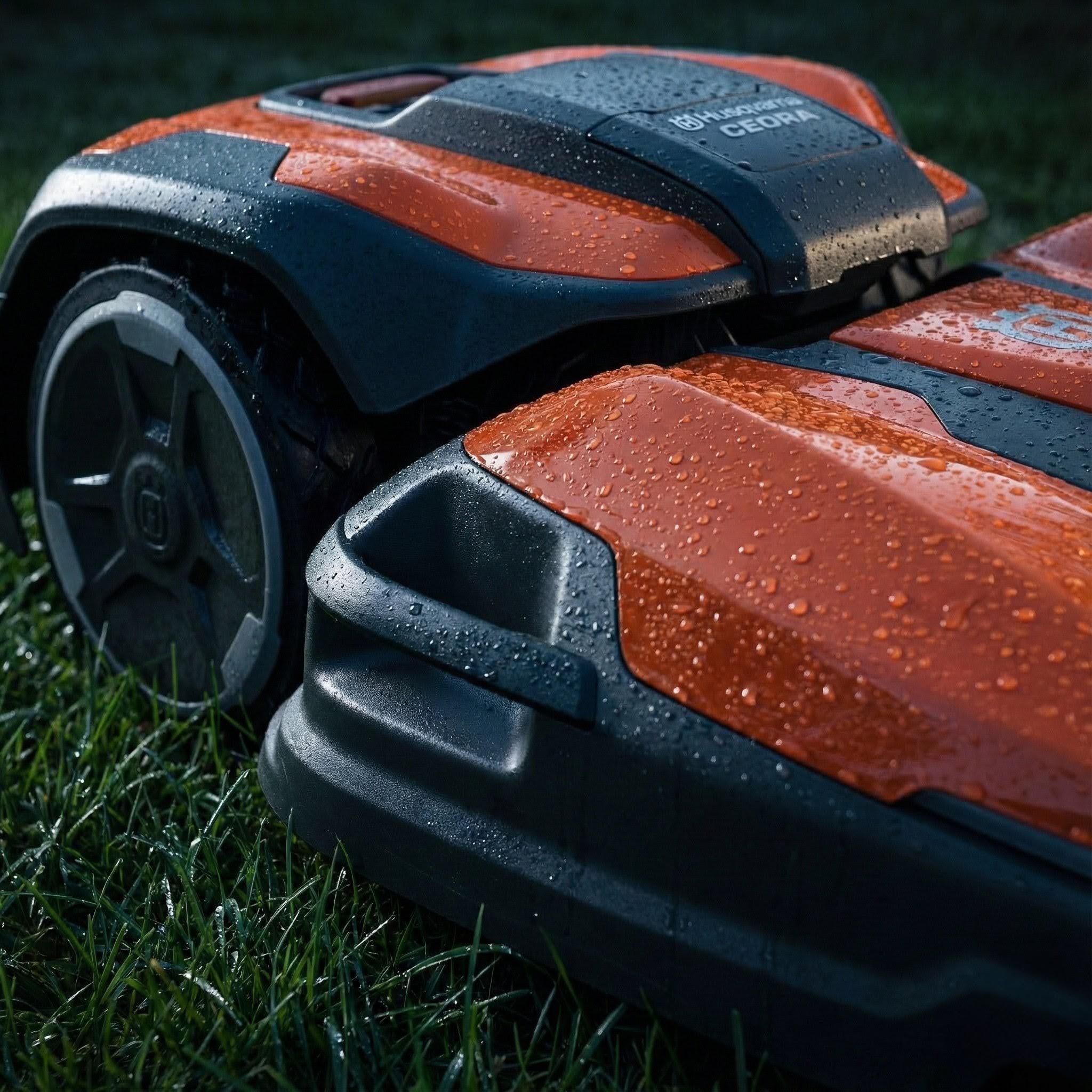
- Fairways: The Husqvarna CEORA handles 5–50 acres per unit. A typical 18-hole course deploys 4–8 units covering 60–120 acres in a continuous daily cycle — same height every pass, zero variation.
- Roughs: Primary roughs adjacent to fairways are CEORA territory. Daily cutting keeps height consistent through peak growing season.
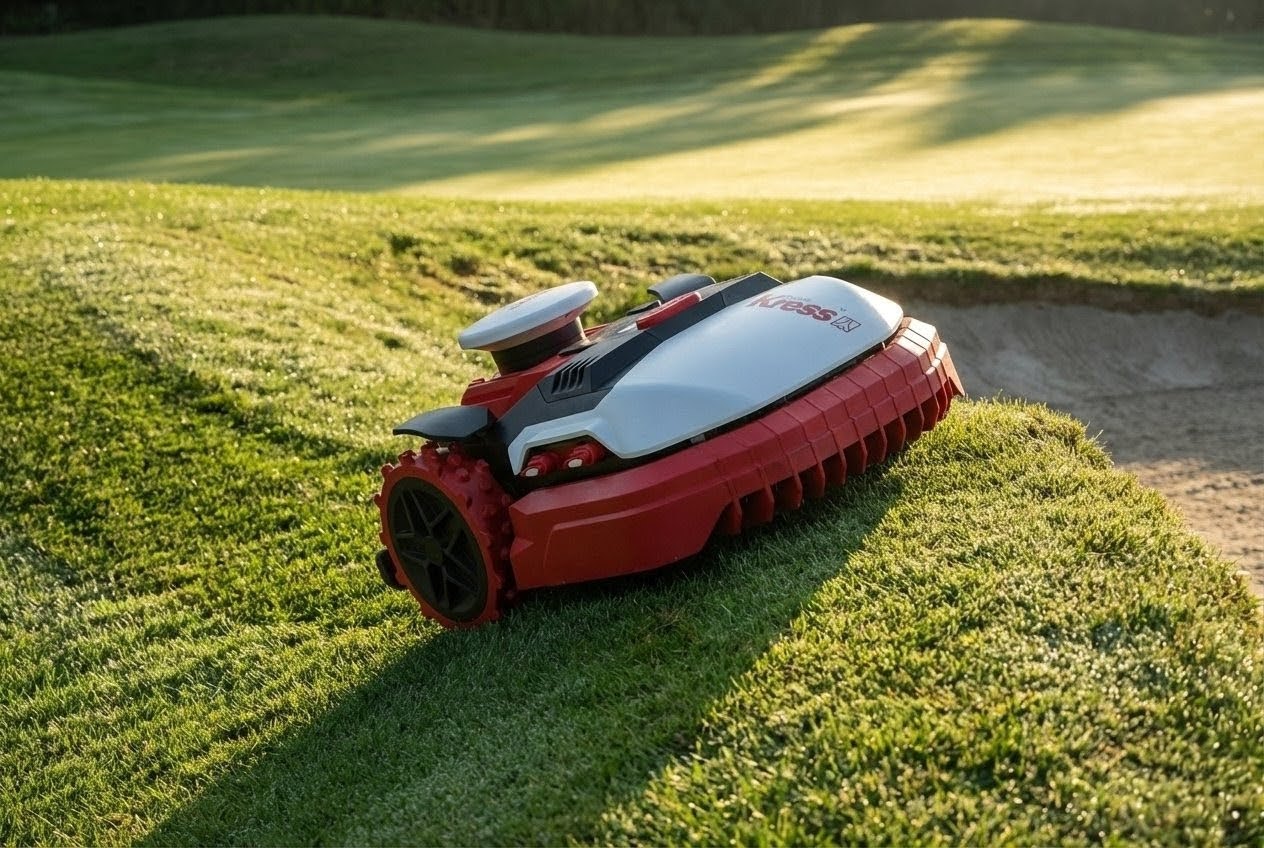
- Approaches & Collars: The Kress commercial platform handles tighter geometry around greens — precision cutting and close-edge capability where large-format units don't fit.
Equipment Options
Husqvarna CEORA — Large Acreage
Gold standard for fairways. RTK GPS navigation, 50% slope capability, fleet management software. Best for 60+ acres of fairway turf.
Kress Commercial Platform — Precision Areas
Tighter turning radius, superior edge cutting. Available through TerraSync's Sourcewell contract #112624-POSC — 20% off list for qualifying institutions.
NexMow — Mid-Range Flexibility
Fills the gap between CEORA's acreage focus and Kress's precision focus. Strong for secondary roughs and moderate terrain.
Korechi Pik'r — Range Ball Automation
Range ball collection can be automated too. The Korechi Pik'r eliminates 700–1,000 hours/year of manual collection. TerraSync is one of the few Southeast providers offering this alongside mowing.
The Labor Math
Traditional full grounds crew (18-hole): $220,000–$380,000/year
TerraSync SYNC Plan (fairways + roughs): $96,000–$180,000/year
Typical net annual savings: $80,000–$120,000+
Implementation: 2–4 Weeks
Here is what the implementation timeline looks like:
- Property Assessment (Days 1–3): Terrain mapping, zone boundaries, charging station planning, slope verification.
- System Design (Days 3–7): Which units cover which zones, how many, where charging stations go.
- Installation (Days 7–14): Charging stations (standard 240V), boundary configuration, unit deployment.
- Commissioning (Days 14–18): Full operational testing — edge coverage, slope handling, docking accuracy.
- Training & Handoff (Days 18–28): Platform training, alert response, 30-day active TerraSync support.
Common Questions
"Can robotic mowers handle my course terrain?"
Commercial units handle up to 50–70% grades. TerraSync surveys every slope before installation. Areas outside rated grade stay on manual schedule.
"What's the electrical requirement?"
Standard 240V/20A circuit per charging station — similar to an EV charger. Most maintenance buildings already have appropriate access.
"What about winter?"
Warm-season turf in the Southeast goes dormant November–March. Units are stored or serviced during dormancy. Spring startup coordinated as part of the annual service plan.
Ready to automate your fairways?
Call (865) 236-2166 or schedule a free course assessment.
Schedule Your AssessmentThe Complete Guide to Robotic Mowing: For Golf Courses (2026)
Labor costs are up. Qualified operators are harder to find. Member expectations are higher than ever. Robotic mowing for golf courses is no longer experimental — it's deployed on hundreds of courses across Europe and expanding fast in North America. Here's everything you need to know.
How It Works
Commercial robotic mowers use RTK GPS positioning (centimeter-level accuracy) or boundary wire to navigate defined mowing zones. Multiple units operate simultaneously, returning autonomously to charging stations when batteries run low. No operator required — just monitoring.
What Gets Covered
- Fairways: The Husqvarna CEORA handles 5–50 acres per unit. A typical 18-hole course deploys 4–8 units covering 60–120 acres in a continuous daily cycle — same height every pass, zero variation.
- Roughs: Primary roughs adjacent to fairways are CEORA territory. Daily cutting keeps height consistent through peak growing season.
- Approaches & Collars: The Kress commercial platform handles tighter geometry around greens — precision cutting and close-edge capability where large-format units don't fit.
Equipment Options
Husqvarna CEORA — Large Acreage
Gold standard for fairways. RTK GPS navigation, 50% slope capability, fleet management software. Best for 60+ acres of fairway turf.
Kress Commercial Platform — Precision Areas
Tighter turning radius, superior edge cutting. Available through TerraSync's Sourcewell contract #112624-POSC — 20% off list for qualifying institutions.
NexMow — Mid-Range Flexibility
Fills the gap between CEORA's acreage focus and Kress's precision focus. Strong for secondary roughs and moderate terrain.
Korechi Pik'r — Range Ball Automation
Range ball collection can be automated too. The Korechi Pik'r eliminates 700–1,000 hours/year of manual collection. TerraSync is one of the few Southeast providers offering this alongside mowing.
The Labor Math
Traditional full grounds crew (18-hole): $220,000–$380,000/year
TerraSync SYNC Plan (fairways + roughs): $96,000–$180,000/year
Typical net annual savings: $80,000–$120,000+
Implementation: 2–4 Weeks
Here is what the implementation timeline looks like:
- Property Assessment (Days 1–3): Terrain mapping, zone boundaries, charging station planning, slope verification.
- System Design (Days 3–7): Which units cover which zones, how many, where charging stations go.
- Installation (Days 7–14): Charging stations (standard 240V), boundary configuration, unit deployment.
- Commissioning (Days 14–18): Full operational testing — edge coverage, slope handling, docking accuracy.
- Training & Handoff (Days 18–28): Platform training, alert response, 30-day active TerraSync support.
Common Questions
"Can robotic mowers handle my course terrain?"
Commercial units handle up to 50–70% grades. TerraSync surveys every slope before installation. Areas outside rated grade stay on manual schedule.
"What's the electrical requirement?"
Standard 240V/20A circuit per charging station — similar to an EV charger. Most maintenance buildings already have appropriate access.
"What about winter?"
Warm-season turf in the Southeast goes dormant November–March. Units are stored or serviced during dormancy. Spring startup coordinated as part of the annual service plan.
Ready to automate your fairways?
Call (865) 236-2166 or schedule a free course assessment.
Schedule Your Assessment