
Robotic Mowing vs Traditional Landscaping: A 2026 Comparison
Crews show up late. Quotes keep climbing. Turnover is relentless. And the grass still has to get cut. By 2026, property managers across the Southeast are asking seriously: is robotic mowing actually better, or technology for technology's sake? Here's the honest comparison.
The Labor Problem Isn't Going Away
Landscaping faces one of the highest annual turnover rates of any industry — frequently exceeding 50%. Labor costs have climbed 20–35% over three years in most Southeastern markets. For a 10-acre property at $800–$1,200 per mow bi-weekly, that's $20,000–$31,000/year — and quality is often inconsistent. Robotic mowing removes the single most volatile variable: human availability.
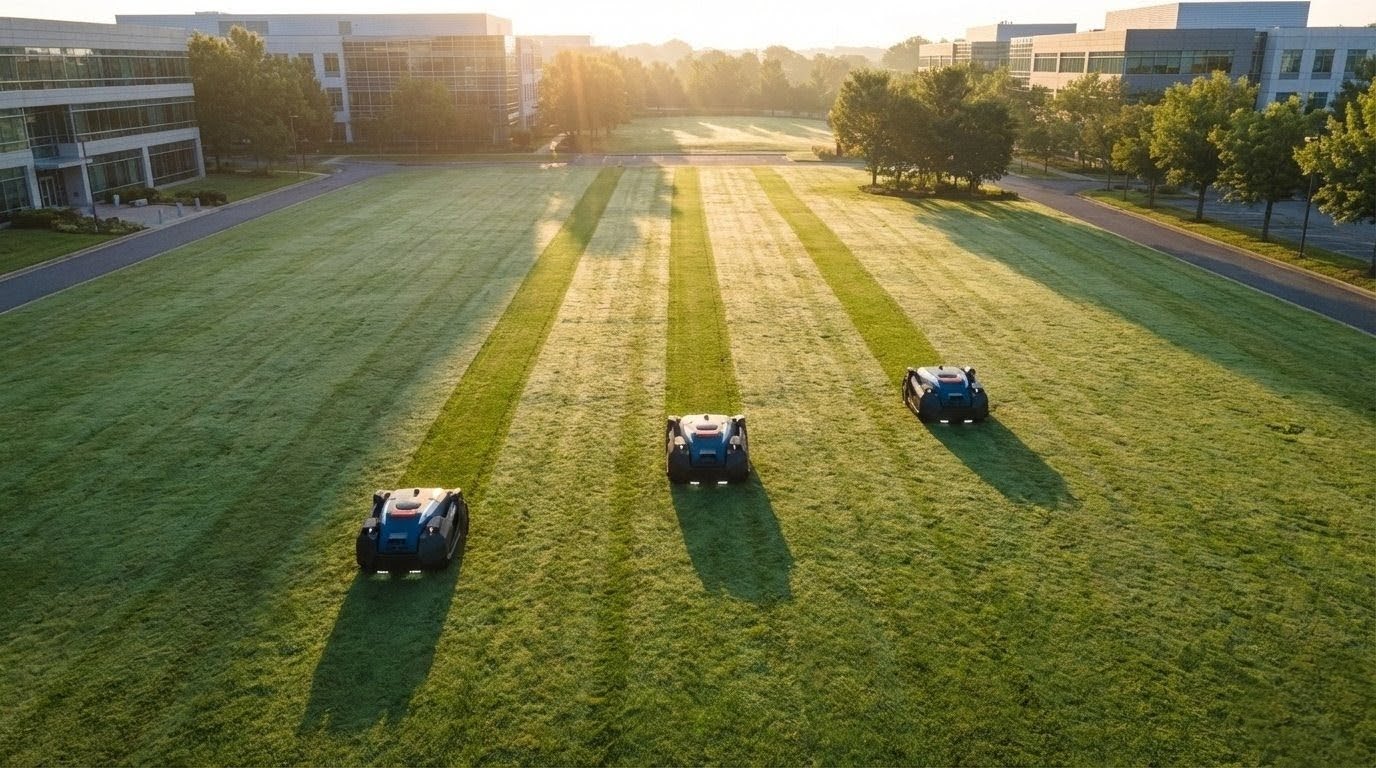
Head-to-Head Comparison
- Labor reliability: Variable (turnover, callouts, cancellations) vs. 24/7 autonomous, no callouts
- Cut quality: Varies by operator skill vs. Identical height every pass, every day
- Noise: High (commercial mowers are loud) vs. Near-silent electric
- Emissions: Gasoline fleet vs. Zero direct emissions
- Capital required: Equipment + fuel + repairs vs. $0 down on SYNC Plan
- Cost trend: Increasing annually vs. Fixed monthly (predictable)
- Management overhead: Crew scheduling, vendor coordination vs. Dashboard monitoring, TerraSync handles the rest
Where Traditional Still Wins
Greens, bunker edging, flower beds, tree rings, and complex hand-trim areas still need human attention. The right model pairs robotic systems for open turf with a smaller crew for detail work. You're not eliminating staff — you're redirecting them to higher-value tasks.
Also: properties with severe slopes (70%+), heavily wooded areas, or very small lots (under 1 acre) may not get enough benefit to justify the program cost.
Real-World Savings: A 20-Acre Commercial Campus
Traditional landscaping contract: $4,800/month ($57,600/year)
TerraSync SYNC Plan (20 acres): $2,800/month ($33,600/year)
Annual savings: ~$24,000 — plus improved cut quality and no vendor management.

The Sustainability Angle
Zero-emission operation is becoming a procurement requirement — not just a nice-to-have — for corporate campuses, municipalities, and universities. Robotic electric mowing eliminates fleet fuel cost and meets sustainability reporting without purchasing carbon offsets.
See the numbers for your property.
Call (865) 236-2166 or request a free grounds assessment.
Request AssessmentRobotic Mowing vs Traditional Landscaping: A 2026 Comparison
Crews show up late. Quotes keep climbing. Turnover is relentless. And the grass still has to get cut. By 2026, property managers across the Southeast are asking seriously: is robotic mowing actually better, or technology for technology's sake? Here's the honest comparison.
The Labor Problem Isn't Going Away
Landscaping faces one of the highest annual turnover rates of any industry — frequently exceeding 50%. Labor costs have climbed 20–35% over three years in most Southeastern markets. For a 10-acre property at $800–$1,200 per mow bi-weekly, that's $20,000–$31,000/year — and quality is often inconsistent. Robotic mowing removes the single most volatile variable: human availability.
Head-to-Head Comparison
- Labor reliability: Variable (turnover, callouts, cancellations) vs. 24/7 autonomous, no callouts
- Cut quality: Varies by operator skill vs. Identical height every pass, every day
- Noise: High (commercial mowers are loud) vs. Near-silent electric
- Emissions: Gasoline fleet vs. Zero direct emissions
- Capital required: Equipment + fuel + repairs vs. $0 down on SYNC Plan
- Cost trend: Increasing annually vs. Fixed monthly (predictable)
- Management overhead: Crew scheduling, vendor coordination vs. Dashboard monitoring, TerraSync handles the rest
Where Traditional Still Wins
Greens, bunker edging, flower beds, tree rings, and complex hand-trim areas still need human attention. The right model pairs robotic systems for open turf with a smaller crew for detail work. You're not eliminating staff — you're redirecting them to higher-value tasks.
Also: properties with severe slopes (70%+), heavily wooded areas, or very small lots (under 1 acre) may not get enough benefit to justify the program cost.
Real-World Savings: A 20-Acre Commercial Campus
Traditional landscaping contract: $4,800/month ($57,600/year)
TerraSync SYNC Plan (20 acres): $2,800/month ($33,600/year)
Annual savings: ~$24,000 — plus improved cut quality and no vendor management.
The Sustainability Angle
Zero-emission operation is becoming a procurement requirement — not just a nice-to-have — for corporate campuses, municipalities, and universities. Robotic electric mowing eliminates fleet fuel cost and meets sustainability reporting without purchasing carbon offsets.
See the numbers for your property.
Call (865) 236-2166 or request a free grounds assessment.
Request Assessment