

Commercial Robotic Mowing: Everything Property Managers Need to Know
From universities and HOAs to airports and municipalities — the complete commercial guide.
Wesley Pitts · Feb 25, 2026 · 2 min read
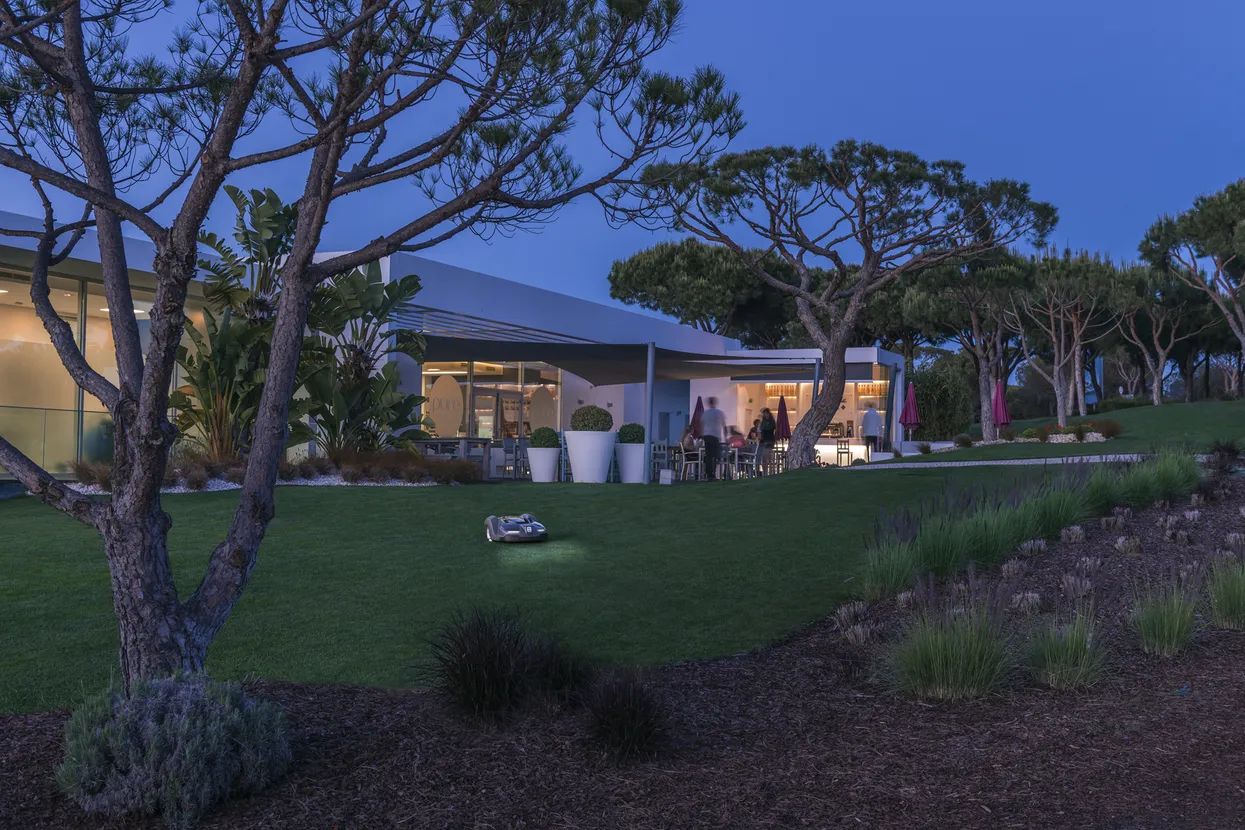
Property managers are being squeezed: labor costs climbing, liability exposure elevated, sustainability mandates adding requirements to budgets that aren't growing. And the grounds still have to look perfect. Commercial robotic mowing is deployed across university campuses, corporate headquarters, HOA communities, airports, and municipal parks across the Southeast. Here's what you actually need to know.
Commercial Systems vs Residential
Consumer robotic mowers use buried boundary wire and cover 0.25–1 acre. Commercial systems use RTK GPS — centimeter-accurate satellite navigation across virtual boundaries. No buried wire on a 20-acre campus. The property is mapped digitally; machines operate within defined zones and adjust in real time.
Which Properties Benefit Most
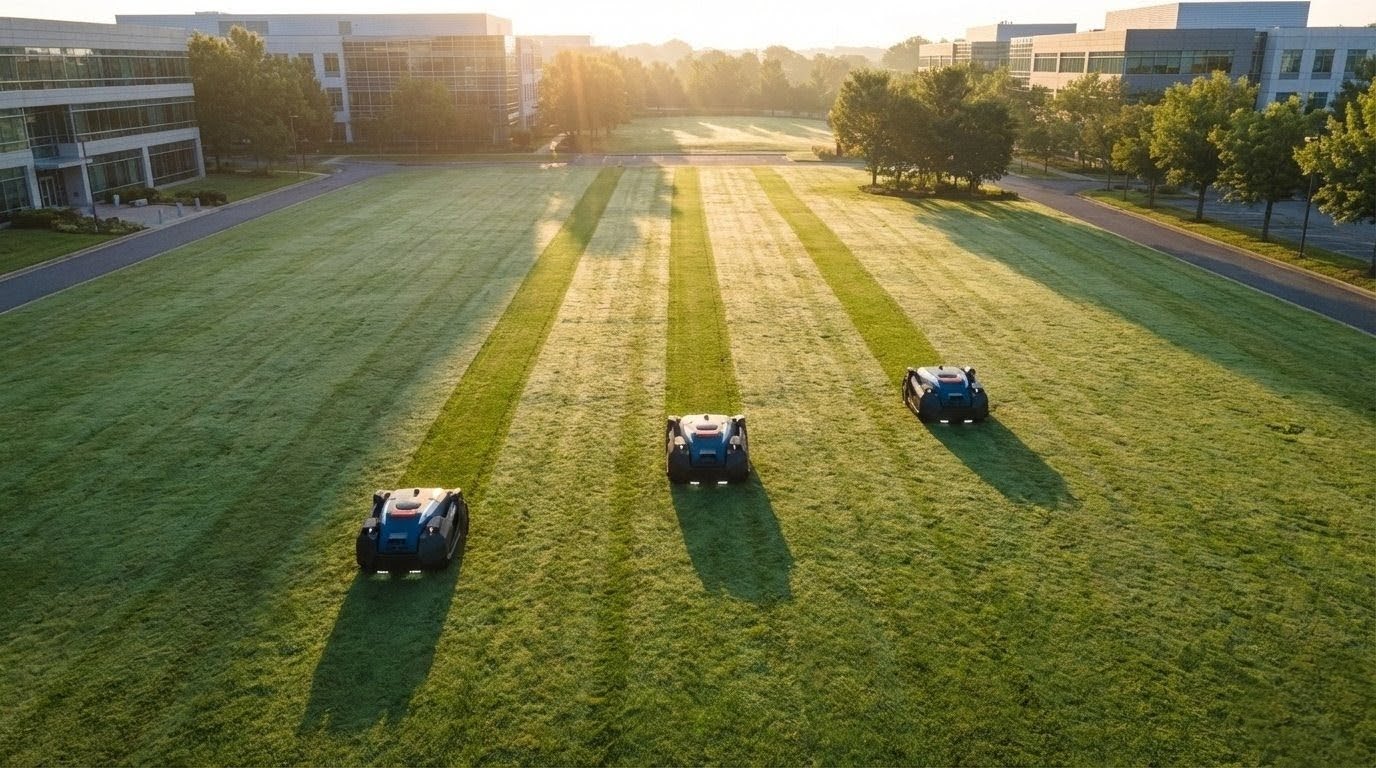
- HOA communities: Predictable monthly cost replaces unpredictable landscaping contracts. Residents notice immediate quality improvement from daily cutting.
- Corporate campuses: Zero-emission meets sustainability reporting. Silent running during business hours — no mowing noise during client visits.
- Universities & municipalities: Sourcewell cooperative contract eliminates separate bid process. 20% off list on Kress commercial equipment.
- Golf courses: 40% labor cost reduction on fairways and roughs.
- Sports complexes & parks: Multi-field management at consistent height. No scheduling gaps during peak usage.
Equipment for Commercial Scale
Husqvarna CEORA — Large Acreage
5–50+ acres per unit. RTK GPS, 50% slope rating, fleet management integration. Best for open fairways, large corporate grounds, park turf.
Kress Commercial Platform — Precision Work
Tighter geometry, superior edge cutting. Available via Sourcewell contract #112624-POSC — no separate bid for qualifying agencies.
NexMow — Mid-Range
Strong for 5–20 acre properties with moderate terrain complexity.
What to Look for in a Provider
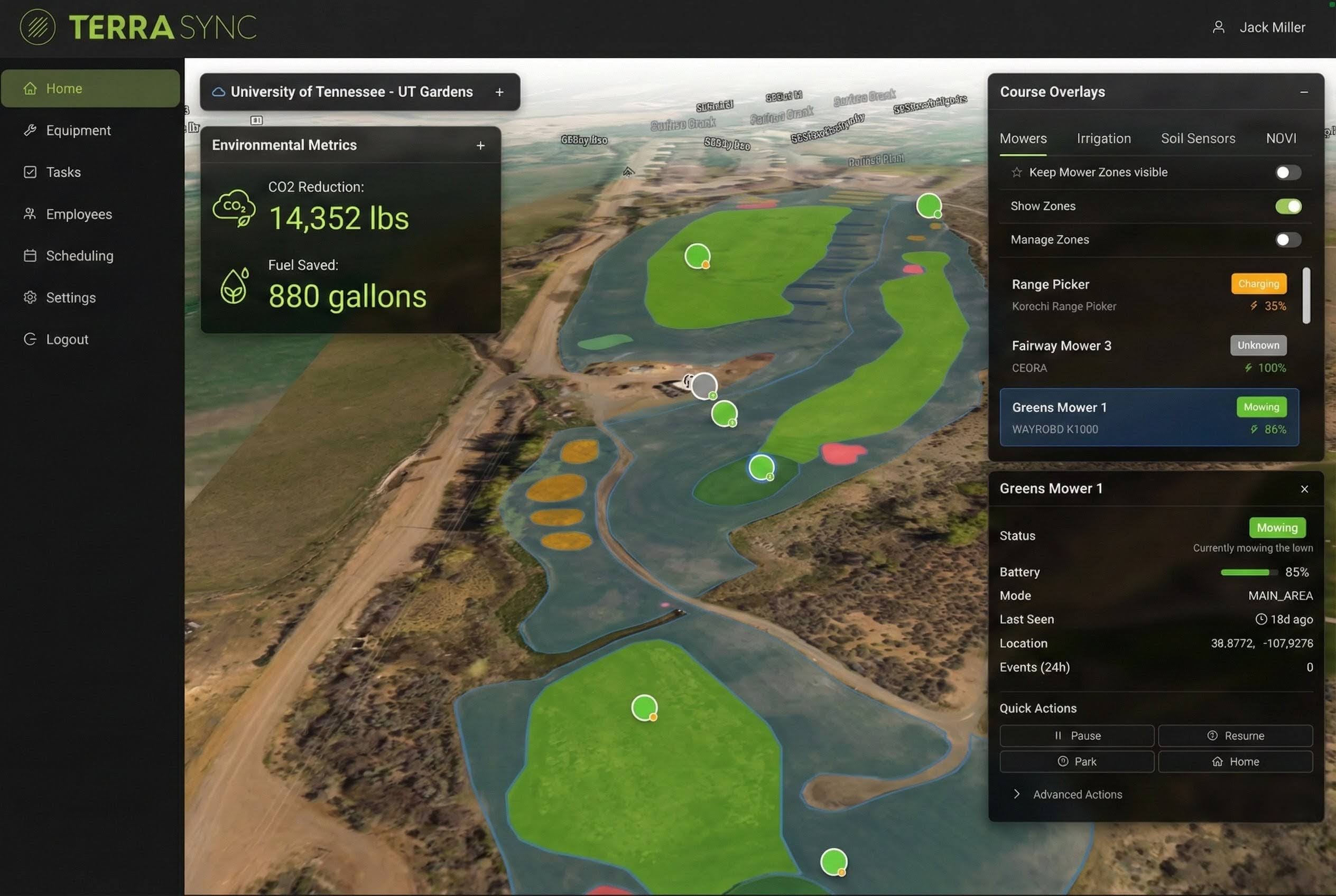
- Response SLA: TerraSync guarantees 32-hour service response and loaner coverage.
- Local presence: Can they physically access your property when something needs attention?
- What's covered: SYNC Plan includes all maintenance, parts, blades, monitoring, and installation.
- References: Ask for operating properties in your region, your property type, your acreage range.
Implementation Timeline
Most commercial deployments go from signed agreement to autonomous operation in 2–4 weeks:
- Assessment (Days 1–3)
- System Design (Days 3–7)
- Installation (Days 7–14)
- Commissioning (Days 14–18)
- Training and Handoff (Days 18–28)
See what automation looks like on your property.
We map every zone, size the fleet and price it before you buy anything.
Keep reading
 Guide
GuideHow robotic mowing works on large properties
How robotic mowers work at scale: RTK navigation vs boundary wire, zones, slope ratings, fleet sizing, charging, weather and the crew you still need.
7 min read · Sep 28, 2026
 Guide
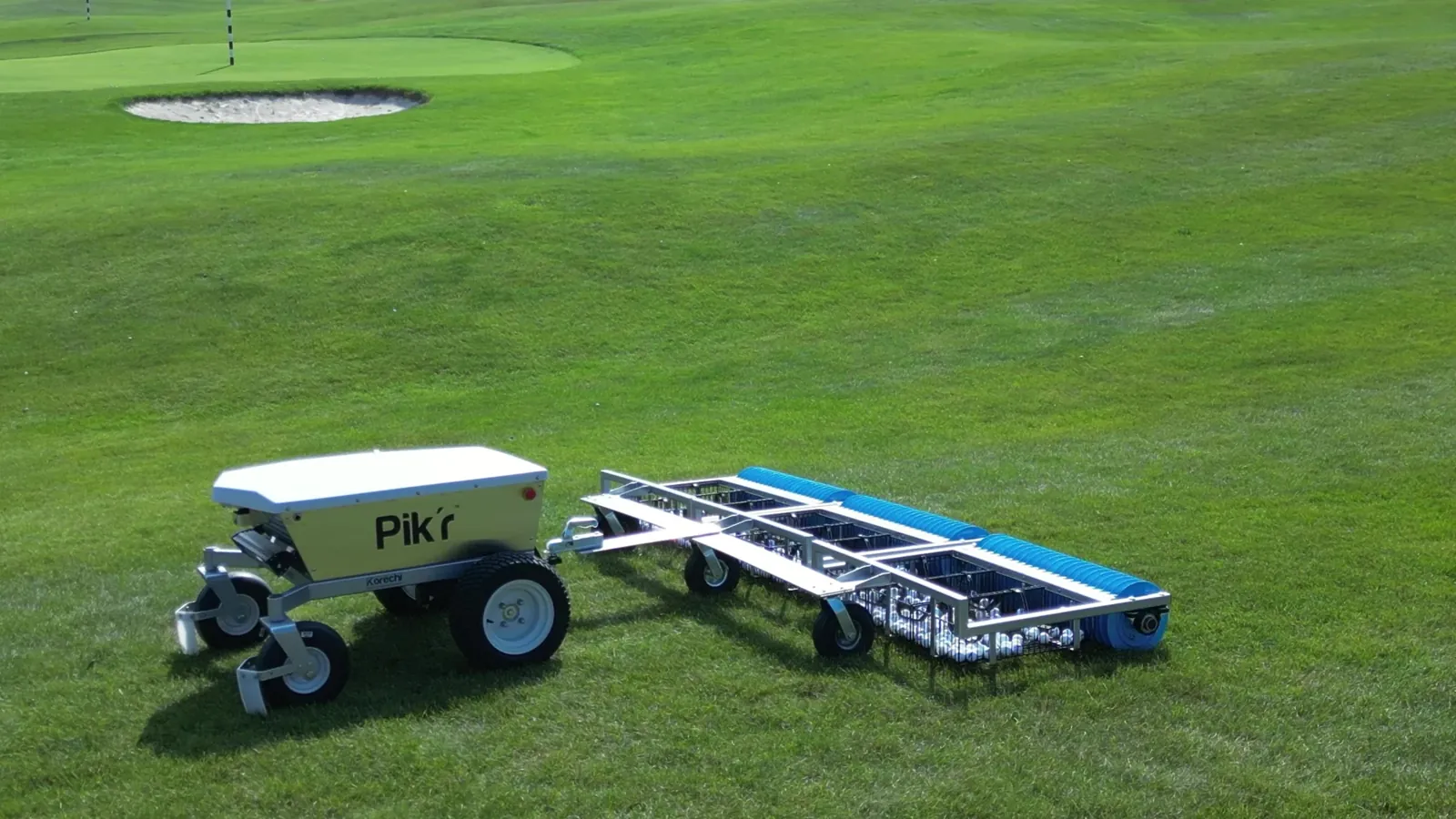
GuideAutonomous course and field equipment: range pickers, bunker rakes and line painters
How autonomous range pickers, bunker rakes and line-marking robots work, what they need from staff, where they fit, and what to ask before you buy.
6 min read · Sep 28, 2026
 Guide
GuideDrones for grounds teams: mapping, inspection and water
Survey drones, spray drones and the Caddis MANTA pond vessel for golf courses and campuses: where each fits, and the FAA rules (Part 107, LAANC, Part 137).
8 min read · Sep 28, 2026