

Drones for grounds teams: mapping, inspection and water
Where survey drones, spray drones and autonomous pond vessels fit on a golf course, campus or estate, and what the FAA requires before anyone flies.
Sep 28, 2026 · 8 min read
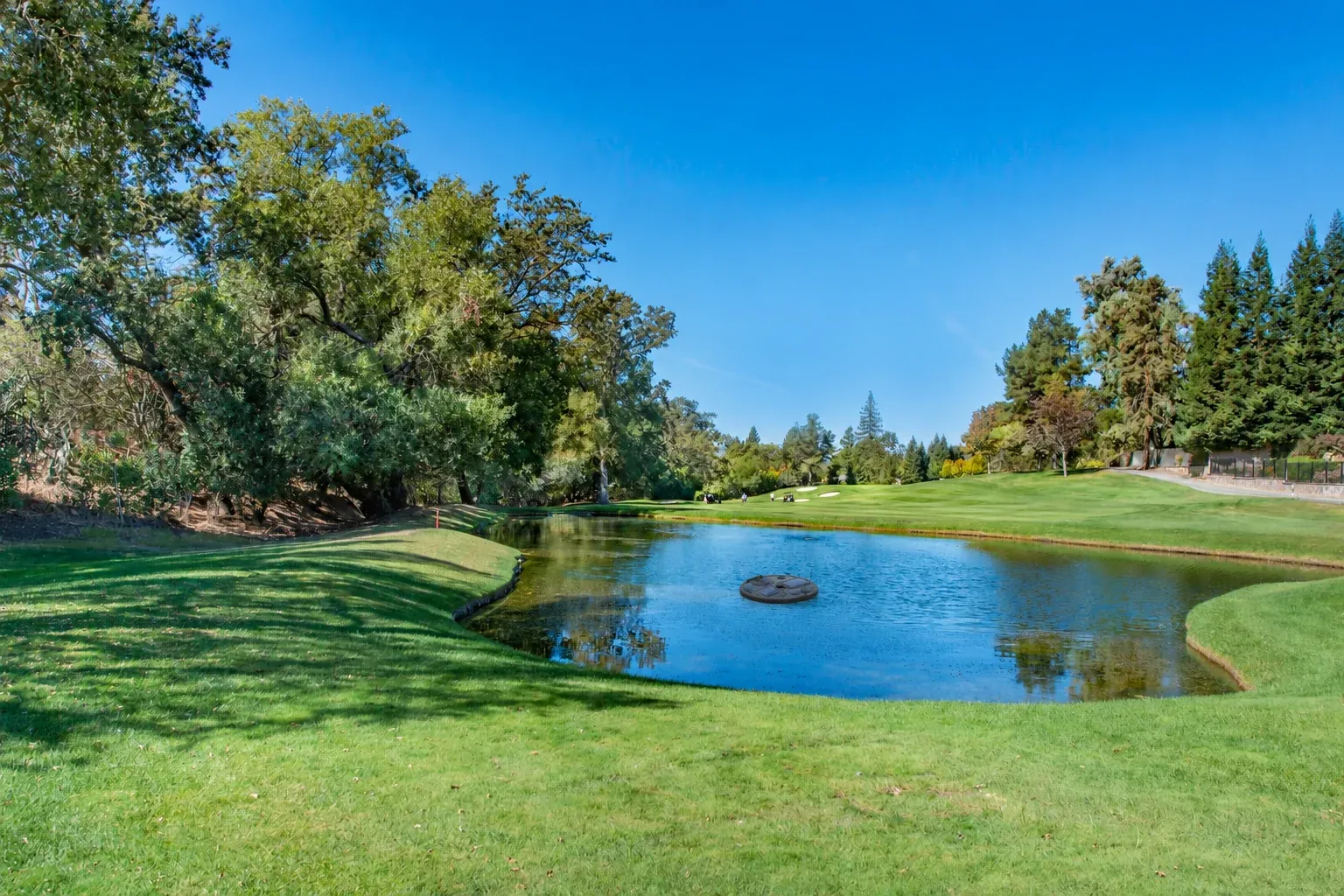
Most grounds teams know their property from the seat of a mower. What they rarely have is a current view from above: where the turf really ends, which roof drain is blocked, why the pond by the seventh hole turns green every August. Drones can give you that view, and a newer kind of water drone can work the pond itself. This guide covers what each type does, what the FAA requires, and where the limits are.
Three kinds of drone, three different jobs
"Drone" covers very different machines. Separate them before talking about rules.
- Survey and mapping drones. Small camera aircraft that fly a programmed pattern and take overlapping photos. Software stitches those photos into one corrected map image, called an orthomosaic, with a consistent scale so you can measure distances and areas on it.
- Spray drones. Much larger aircraft that carry a liquid tank or a spreader for granules. They sit under a separate set of aviation and pesticide rules. We cover them in depth in our guide to autonomous chemical application.
- Water drones. Not aircraft at all. These are autonomous boats, properly called unmanned surface vehicles, that work on a pond or lake. The one we work with is the Caddis MANTA.
Mapping and inspection: the flying work
Mapping before you plan
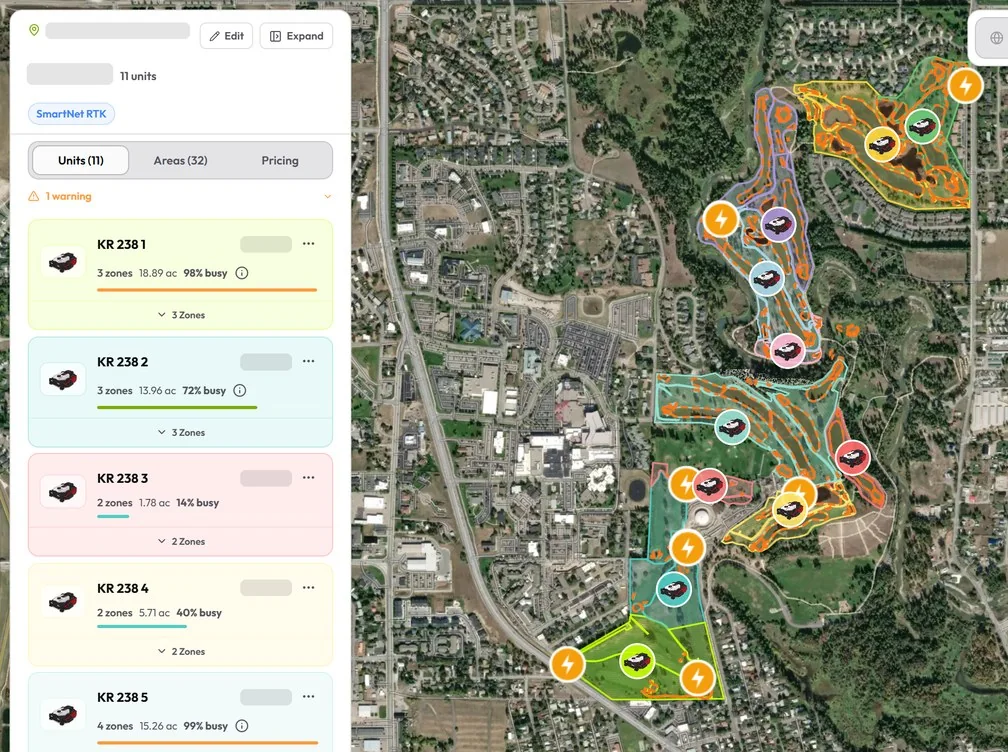
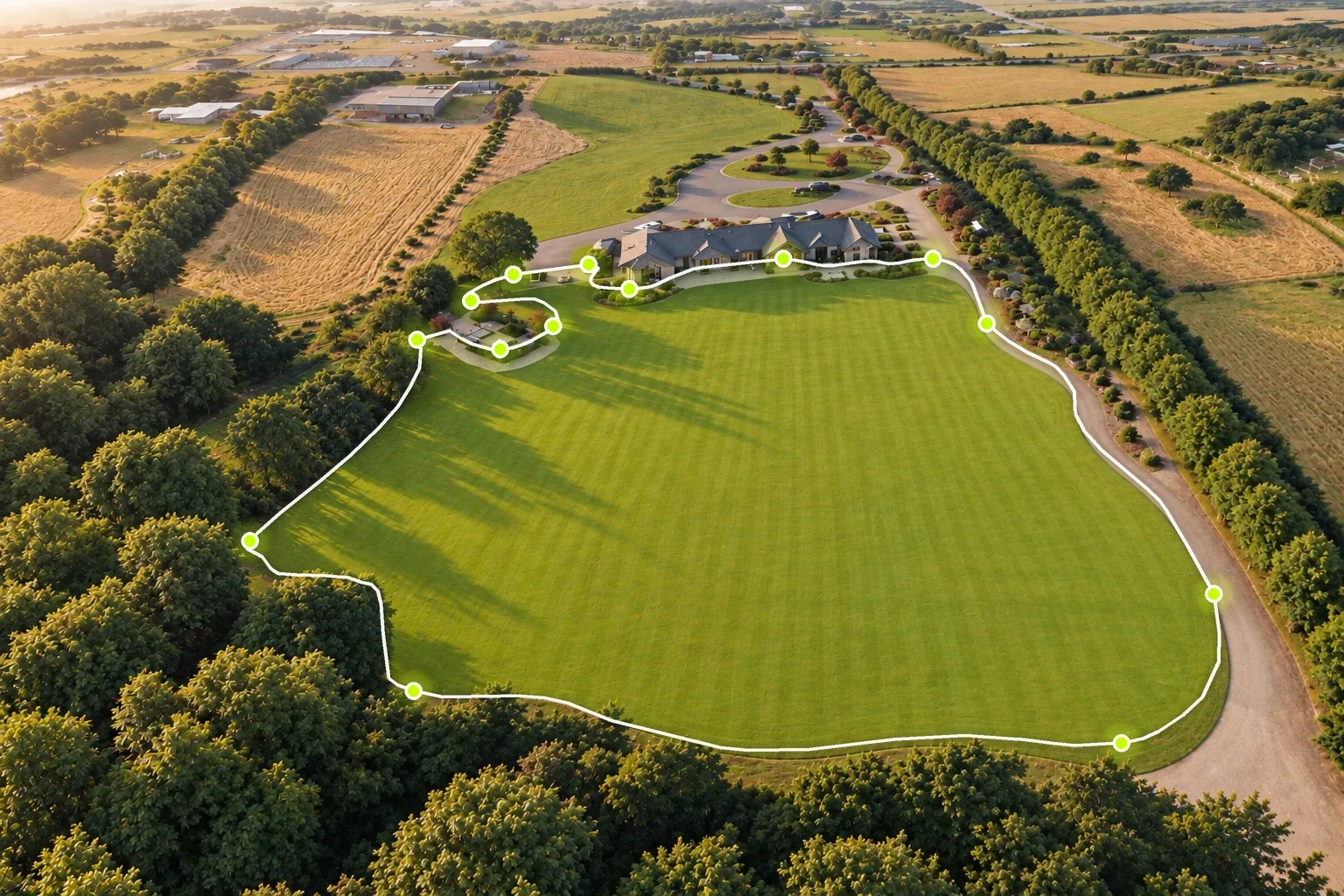
Any automation plan is only as good as the map under it. When we plan a property in Velocity, we start from aerial imagery and automated zone detection, then a person reviews the property boundary, the mowable zones, and the stay-out areas: buildings, pavement, water, landscape beds, roads and wooded areas. Only then does anyone plan machines against it.
Aerial imagery can be months or years old. A new parking lot, a regraded bank, a tree line that came down in a storm: none of that shows up until the imagery refreshes. A mapping flight gives you a current, high-resolution picture to check those boundaries against. On a campus that has just finished construction, that check can be the difference between a zone that works and a mower that stops at a fence nobody drew.
Inspection of hard-to-reach areas
The other everyday use is looking at places that take a ladder, a lift or a long walk: roofs and gutters, drainage swales, steep banks, pond edges, the canopy over a cart path, a retention basin after a heavy rain. A drone turns "someone should go look at that" into a photo on a phone in a few minutes.
The limit: a photo shows symptoms, not causes. A drone finds the sagging gutter; the roofer still fixes it.
Water drones: the Caddis MANTA on a pond
Ponds are the part of a property that automation usually skips. Algae gets treated after it shows up, often with an algaecide such as copper sulfate, and then treated again. The Caddis MANTA is built to change that pattern.
Caddis Technologies, a company in Hilliard, Ohio, describes the MANTA as an unmanned surface vehicle designed to prevent harmful algae blooms and improve water quality. According to Caddis:
- It uses UV-C LED light, not chemicals, to neutralize algae and toxins, targeting cyanobacteria at the cellular level.
- It treats the top 6 inches to 2 feet of water.
- Growth is inhibited for up to 200 hours after treatment.
- Onboard sensors check for cyanotoxins, pathogens, chemical pollutants and nutrient imbalances.
- It is battery-operated and runs autonomously around the clock on a treatment schedule you can customize.
In practice, that means a scheduled treatment and a stream of water readings, instead of a reaction to a bloom a member already noticed.
Now the limits. Those figures are the manufacturer's, so ask for results from ponds similar to yours in size, depth and nutrient load. The MANTA treats the upper layer of water; it does not remove the reasons a pond grows algae in the first place, such as fertilizer runoff, waterfowl or water that barely moves. Aeration, buffer plantings and careful application near the bank still matter. And because it floats rather than flies, the FAA drone rules below apply to your aircraft, not to the vessel on your pond.
The rules: what the FAA requires before anyone flies
These are the federal basics for a US grounds team. They are not legal advice, and FAA guidance changes, so check the FAA's own pages first.
A Remote Pilot Certificate for work flights
Flying a drone under 55 pounds for work or business falls under the FAA's Small UAS Rule, Part 107. Recreational flying is a narrow exception for flying purely for fun, so a crew member mapping the course for the department is flying for work. The pilot needs a Remote Pilot Certificate: be at least 16, meet the FAA's English and fitness requirements, and pass the "Unmanned Aircraft General – Small" knowledge test at an approved testing center. The certificate must be easily accessible during every flight, and holders must complete online recurrent training every 24 calendar months.
Registration and Remote ID
Each drone flown under Part 107 must be registered with the FAA through FAADroneZone. Registration is valid for three years, and the registration number has to be marked on the drone. Since September 16, 2023, a drone that requires registration must also broadcast Remote ID, unless it is flown inside an FAA-recognized identification area.
Operating limits
Part 107 flights stay at or below 400 feet above ground level, within the pilot's visual line of sight, and yield right of way to crewed aircraft. Some of these limits can be waived by the FAA for a specific operation. Flying over people, which matters on a course full of golfers, has been allowed without a waiver since April 21, 2021, but only when the drone and the operation meet the requirements of the Operations Over People rule.
Airspace near airports
If your property sits near an airport, check the airspace before anything else. Flying in controlled airspace (Class B, C or D, or the surface area of Class E airspace around an airport) requires an FAA airspace authorization. The quickest route is LAANC, the Low Altitude Authorization and Notification Capability, which pilots use through FAA-approved apps. Requests are checked against FAA airspace data, and authorizations for flights at or below 400 feet can come back in near real time. LAANC grants airspace access only; the pilot still has to check notices, temporary flight restrictions and the weather.
Spraying or spreading is a different category
Using any aircraft, including a drone, to dispense pesticides or any substance meant for plant nourishment, soil treatment or pest control is an agricultural aircraft operation under Part 137. That includes fertilizer, not just chemicals. It needs a Part 137 certificate plus FAA exemptions, and drones of 55 pounds or more, counting the load, need exemptions under 49 U.S.C. 44807. The FAA asks for exemption petitions at least 120 days ahead. State pesticide licensing applies on top.
Where drones fit, and where they don't
Drones earn their keep on large or complicated properties, where walking the whole site takes most of a day. They are especially useful before an automation project, after construction or grading, after storms, and anywhere a problem sits out of reach. A pond that blooms every summer is a good candidate for a water drone.
They fit less well in some places:
- Small, simple sites. On a one-acre estate lawn, a walk around the property often answers the question faster than a flight.
- Weather. Wind, rain and low cloud ground small aircraft. Plan inspections around the forecast, not the other way around.
- Busy days. Tournaments, events and full tee sheets add people under the flight path and more rules to meet. Flying before play is usually simpler.
- Neighbors. A camera over a property line invites complaints. Keep flights over your own ground and check any local rules.
What it takes to run
A drone program is mostly people and routine. You need a certificated pilot, either on staff or contracted. You need a simple plan for each flight: the area, the airspace check, the time of day, and who will look at the results. The imagery only pays off if someone reviews it and turns it into work orders. For a water drone, add launch and retrieval, charging, a treatment schedule and regular service.
A common way programs stall: the equipment arrives, nobody owns it, and it sits in a closet by August. Our consulting work starts with the property and the people, then decides which machines belong in the plan at all.
Questions to ask before you buy or hire
- Who on our team holds, or will earn, the Remote Pilot Certificate, and who covers when they are off?
- Is any part of our property in controlled airspace, and will we need authorization for each flight?
- What will we do with the imagery? Who reviews it, and how often?
- For a water drone: what results has the maker seen on ponds like ours, and how are service and battery replacement handled?
- If we want to spray or spread from the air, who holds the Part 137 certificate and the state pesticide license?
FAQ
Do I need a license to fly a drone over my own golf course?
If the flight is for work, yes. Flying for the business falls under Part 107, so the pilot needs a Remote Pilot Certificate and the drone must be registered.
Can we fly while golfers are on the course?
Only if the drone and the operation meet the FAA's Operations Over People requirements. It is usually simpler to fly before play or over closed holes.
Can we use a drone to spray the ponds or the rough?
Aerial application falls under Part 137, and state pesticide licensing still applies. Read our guide to spray drones and precision sprayers before you plan it.
Does the MANTA need a pilot's license?
It is a surface vessel, not an aircraft, so Part 107 does not apply to it. It still needs someone to own its schedule, its readings and its service.
See what automation looks like on your property.
We map every zone, size the fleet and price it before you buy anything.
Keep reading
 Guide
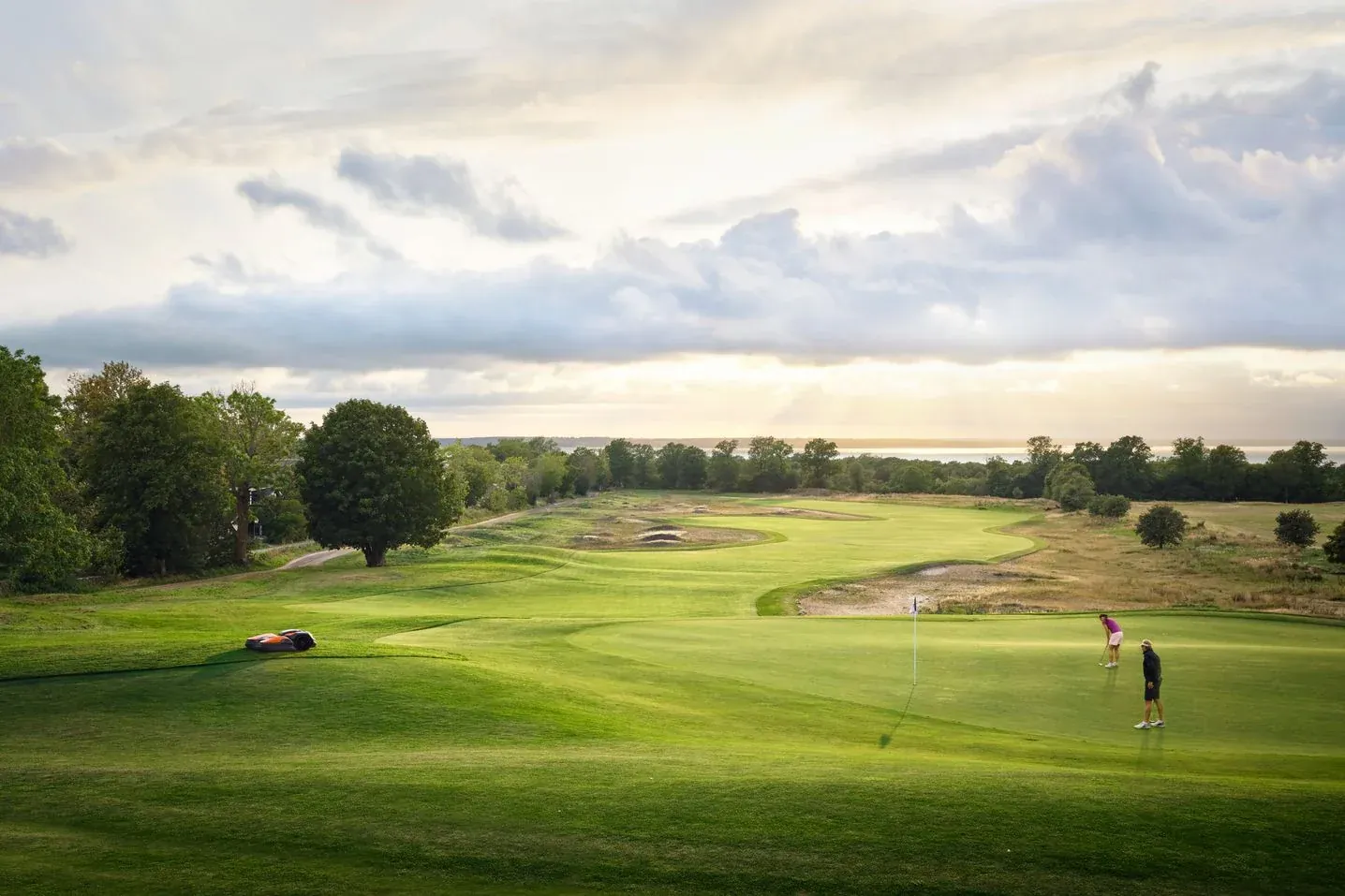
GuideHow robotic mowing works on large properties
How robotic mowers work at scale: RTK navigation vs boundary wire, zones, slope ratings, fleet sizing, charging, weather and the crew you still need.
7 min read · Sep 28, 2026
 Guide
GuideAutonomous course and field equipment: range pickers, bunker rakes and line painters
How autonomous range pickers, bunker rakes and line-marking robots work, what they need from staff, where they fit, and what to ask before you buy.
6 min read · Sep 28, 2026
 Guide
GuideSoil sensors and smart irrigation: watering by data, not by timer
How soil moisture sensors and smart controllers decide when to water turf: what sensors measure, where to place them, install and upkeep, and what to ask.
8 min read · Sep 28, 2026